
 English
 Español
 ไทย
ไทย Indonesia

تعقيم الاطباق
Dishware disinfecting is an essential step in maintaining hygiene in both home and commercial kitchens. Proper disinfection helps reduce the risk of foodborne illness by eliminating harmful microorganisms such as bacteria, viruses, and fungi that can remain on plates, bowls, cups, and utensils after normal use. While washing with soap and water removes visible food particles and grease, it may not be enough to kill all pathogens. Disinfecting provides an additional level of protection.The process usually begins with thorough washing. Dishware should first be scraped to remove leftover food, then washed in hot water with an appropriate detergent. This step loosens and removes organic matter, which can otherwise protect microorganisms from contact with disinfectants. Attention should be given to edges, handles, and any textured surfaces where residues can accumulate. Rinsing with clean water is necessary to remove detergent, as leftover soap may reduce the effectiveness of the disinfecting stage.There are several common methods for disinfecting dishware. One widely used approach is heat disinfection. This can be done by immersing items in hot water at a sufficiently high temperature for a defined period of time, or by using a high‑temperature dishwasher cycle. Many standards recommend that the final rinse reach a temperature capable of killing most common pathogens, provided that the temperature is maintained long enough. Heat disinfection is effective, leaves no chemical residue, and is suitable for most durable materials such as glass, stainless steel, and certain types of plastic that can tolerate high temperatures.Chemical disinfection is another common option, especially where high temperatures are not practical. Diluted solutions of food‑safe disinfectants, such as chlorine‑based or quaternary ammonium compounds, are often used. The concentration and contact time must follow safety and efficacy guidelines. Dishware is usually fully immersed or thoroughly sprayed, ensuring that all surfaces are covered. After the required contact time, items may need to be rinsed with potable water, depending on the product instructions, to remove any residual chemicals that could affect taste or safety.Air‑drying on clean racks is preferred over towel‑drying, as towels can reintroduce contaminants. Storage is also important: disinfected dishware should be kept in a clean, dry environment, protected from dust, insects, and contact with raw foods or dirty surfaces. Regular cleaning and disinfection of drying racks, sinks, and surrounding areas support the overall effectiveness of dishware hygiene practices.In institutional settings such as restaurants, hospitals, and schools, dishware disinfecting is usually governed by health regulations. These often specify minimum temperatures, contact times, and chemical concentrations, as well as monitoring procedures to verify that equipment is functioning correctly. In home kitchens, following basic principles—washing thoroughly, using hot water, applying appropriate disinfecting methods when needed, and ensuring clean storage—provides a practical level of protection. By combining effective washing, validated disinfecting methods, and careful handling, it is possible to significantly reduce microbial contamination on dishware and promote safer food consumption.
نتاج
تصنيف:
-
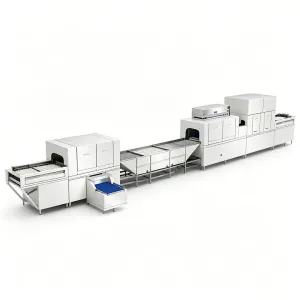
خط تجميع تجفيف وتجفيف وغسل الأطباق التجارية على نطاق واسع
تصنيفها: سلسلة غسالة الصحونالمشاهدات: 11عدد:وقت الإصدار: 2026-04-20 14:35:01إن خط التجميع التجاري لغسيل وتعقيم وتجفيف الأطباق على نطاق واسع يحقق الغسيل والتطهير والتجفيف الأوتوماتيكي المتكامل. إنها تعالج أدوات المائدة الضخمة بكفاءة، وتخفض تكاليف العمالة وتلبي متطلبات النظافة الصارمة لتقديم الطعام.
أخبار
تصنيف:
لا توجد نتائج بحث!
حالة
تصنيف:
لا توجد نتائج بحث!
فيديو
تصنيف:
لا توجد نتائج بحث!
تحميل
تصنيف:
لا توجد نتائج بحث!
تجنيد
تصنيف:
لا توجد نتائج بحث!
المنتجات الموصى بها
لا توجد نتائج بحث!



 واتس اب
 هاتف
هاتف